
Naloxone is a safe, fast-acting medication that can temporarily reverse an opioid overdose and give someone time to breathe until an ambulance arrives.
If you love someone who uses opioids, or you use them yourself, a naloxone kit is one of the most practical things you can keep at home. It will not treat addiction and it is not a substitute for calling 911, but in the minutes that matter most it can keep a person alive. In Ontario these kits are free, you do not need a prescription or a health card to get one, and anyone can be trained to use one in a few minutes.
This guide walks through how to recognize an opioid overdose, how to give naloxone step by step, where to pick up a free kit near you, and what to do once the person wakes up. If you are reading this because opioids have become a problem for you or someone close to you, our team can also help with OHIP-covered opioid addiction treatment across Ontario.
What naloxone is and how it works
Naloxone, pronounced na-LOX-own, is a medication that reverses the effects of opioids for a short time. Opioids like fentanyl, carfentanil, heroin, morphine, oxycodone, and hydromorphone slow the body down. During an overdose they slow or stop a person’s breathing, which is what makes an opioid overdose deadly. Naloxone knocks the opioids off the receptors in the brain long enough for normal breathing to return.
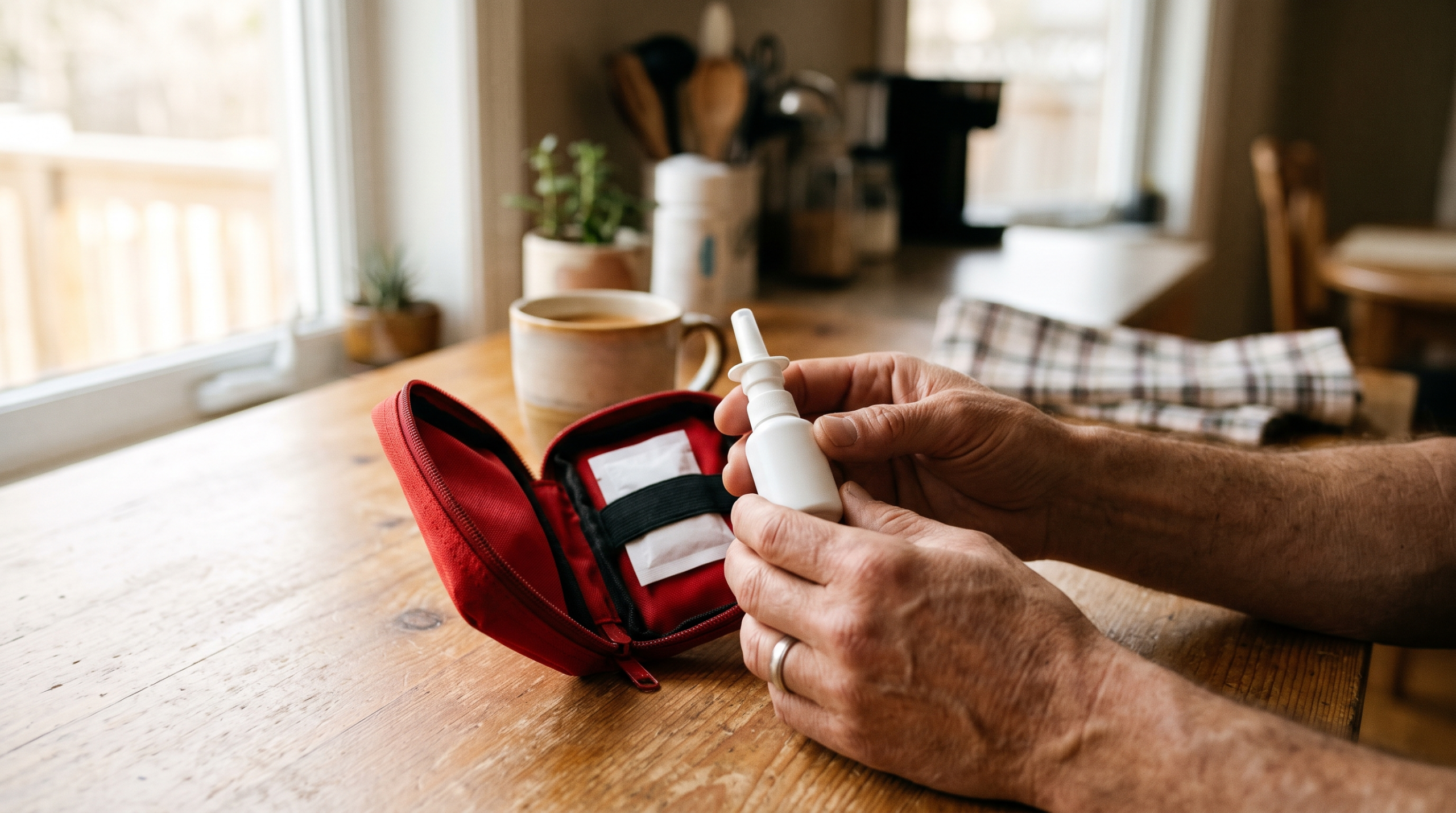
You may also hear naloxone called Narcan, which is a common brand name for the nasal spray version. Naloxone hydrochloride and Narcan are the same medication. It comes in two forms: a nasal spray you give into one nostril, and an injectable version you inject into a muscle in the arm or leg.
Two things are worth understanding before an emergency ever happens. First, naloxone is safe to give even if you are not sure opioids are involved. If the person has not taken opioids, it will not hurt them, so there is no reason to hold back. Second, naloxone wears off faster than many opioids do, usually within 20 to 90 minutes. Fentanyl and carfentanil are so strong and long-lasting that a person can slip back into overdose after the naloxone fades, which is exactly why you call 911 and stay with them. For more on why these drugs are so dangerous, see our explainer on opioid overdose and its dangers and the growing risks of fentanyl in the drug supply.
How to recognize an opioid overdose
Naloxone only helps if you can spot an overdose in time. A person who has overdosed on opioids usually cannot be woken up and is barely breathing. Look for these signs:
- Not responding: they cannot stay awake, walk, or talk, and they do not react when you call their name or shake their shoulders.
- Slow or stopped breathing: breathing is very slow, shallow, or has stopped completely.
- Choking or gurgling sounds: snoring, gurgling, or a rattling noise that sounds like they are struggling to breathe.
- Blue or grey skin: lips, nail beds, and skin turn pale, blue, grey, or purple, and the person feels cold to the touch.
- Limp body: the body goes limp, or in some cases the muscles become rigid.
- Pinpoint pupils: the pupils shrink to tiny points, or the eyes roll back.
If you see any of these signs, treat it as an overdose and act right away. It is always safer to give naloxone and call for help than to wait and hope the person sleeps it off.
How to use a naloxone kit step by step
Every kit in Ontario comes with an instruction insert, and the pharmacist or program staff who give you the kit will train you in person. The steps below follow the Ontario naloxone program and work for both the nasal spray and the injectable kit. A simple way to remember them is to stimulate, call, give naloxone, support breathing, and stay.
- Try to wake them. Shout their name and shake their shoulders. Rub your knuckles firmly on their breastbone. If they do not respond, treat it as an overdose.
- Call 911. Ask someone nearby to call, or put your phone on speaker and call yourself. Tell the dispatcher the person is not breathing or is unresponsive.
- Give naloxone. For a nasal spray kit, lay the person on their back, insert the tip of the nozzle into one nostril until your fingers touch the base of their nose, and press the plunger firmly to release the full dose. For an injectable kit, draw up one vial or ampoule (0.4 mg in 1 mL) into the syringe, or use the pre-filled syringe, and inject it straight into a large muscle such as the upper arm or outer thigh. Naloxone can be injected through light clothing if needed.
- Support their breathing. If they are not breathing, give rescue breaths using the breathing barrier from the kit, or start chest compressions if you are trained. Keeping oxygen moving matters as much as the naloxone itself.
- Wait two to three minutes, then repeat if needed. Naloxone takes about two to five minutes to work. If there is no improvement after two to three minutes, give a second dose in the other nostril or a second injection. Most kits contain two doses for this reason.
- Put them in the recovery position and stay. Once they are breathing on their own, or if you have to step away, roll them onto their side with the top knee bent and the head tilted slightly back so they do not choke. Stay with them until paramedics arrive, because the overdose can return as the naloxone wears off.
The two kit types are slightly different to handle, so it helps to know which one you have before an emergency. Here is how they compare.
| Feature | Nasal spray kit | Injectable kit |
|---|---|---|
| How it is given | Sprayed into one nostril | Injected into an arm or thigh muscle |
| Dose | 4 mg in 0.1 mL per spray | 0.4 mg in 1 mL per vial or ampoule |
| Doses per kit | Two sprays | Two vials or ampoules with syringes |
| Needle involved | No | Yes |
| Easiest for first-time rescuers | Usually the simpler option | Takes a little more practice |
What naloxone does and does not reverse
Naloxone works on opioids and nothing else. That is an important point in today’s drug supply, where substances are often mixed. It will reverse an overdose from fentanyl, carfentanil, heroin, morphine, oxycodone, hydromorphone, codeine, methadone, and similar drugs. It will not reverse an overdose caused by alcohol, benzodiazepines, cocaine, methamphetamine, or GHB, because those are not opioids.
A growing concern across Ontario is xylazine, an animal sedative sometimes found in street opioids. Naloxone does not reverse xylazine, but experts still say to give it, because most of these mixtures also contain fentanyl, and naloxone will reverse the opioid part. The breathing support you provide becomes even more important in these cases. When several substances are in play at once, the situation is complicated and so is recovery, which is one reason opioid use disorder is best treated with professional support rather than willpower alone.
What happens after you give naloxone
When naloxone takes effect, the person usually starts breathing again and may wake up within a few minutes. Because naloxone strips the opioids off their receptors so suddenly, waking up can feel rough. Some people come to feeling confused, nauseous, shaky, sweaty, or in sudden withdrawal, and a few wake up agitated or upset. This reaction is uncomfortable but not dangerous, and it is a sign the medication worked.
Stay calm and keep them calm. Explain what happened, encourage them not to use more drugs, and keep them from walking off before paramedics arrive. The biggest risk now is a second overdose. Naloxone can wear off in as little as 20 to 30 minutes while the opioids in their system last much longer, so the overdose can come back. This is especially true with fentanyl and carfentanil. Stay with the person, watch their breathing, and be ready to give another dose if you have one.
Once the immediate danger has passed, that moment can also be a turning point. Surviving an overdose is frightening, and many people are more open to help in the days that follow. If that is where you or your loved one are, learning the signs that it is time to get help and what a first addiction assessment looks like can make the next step feel less overwhelming.
Where to get a free naloxone kit in Ontario
Ontario makes naloxone free and easy to get. You do not need a prescription, and you do not need an Ontario health card. You are eligible for a free kit if you are at risk of an opioid overdose, if you are a family member or friend of someone at risk, or if you are being released from a provincial correctional facility.
There are two main places to pick one up:
- Participating pharmacies: Many Ontario pharmacies carry free injectable and nasal spray kits. Not every pharmacy stocks them, so it is worth calling ahead. The pharmacist will show you how to recognize an overdose and how to use the kit, and you can ask any questions while you are there.
- Community organizations: Public health units, Community Health Centres, needle exchange and harm reduction programs, withdrawal management programs, HART Hubs, AIDS service organizations, and hospitals with an emergency department also give out free kits and training. Some run mobile outreach vans in cities like Toronto, Hamilton, Ottawa, and across Peel, Durham, and Halton.
The Ontario government keeps a searchable map of pharmacies and community organizations that hand out kits. Check the expiry date written on the vials, ampoules, or nasal spray device, and swap an expired kit for a new one at your pharmacy. For official details and the map, visit the province’s free naloxone kit program.
You will not get in trouble for calling 911
Fear of police is one of the most common reasons people hesitate to call for help during an overdose, and that hesitation costs lives. Canada’s Good Samaritan Drug Overdose Act gives legal protection to anyone who calls 911 for an overdose. It protects both the person who overdosed and the person who called from charges for simple possession of drugs, and from breaches of conditions like bail or parole related to simple possession.
The message from public health is simple. If you think someone is overdosing, call 911, give naloxone, and stay. You can read the federal details on the Good Samaritan Drug Overdose Act from Health Canada.
Naloxone keeps someone alive, treatment helps them stay that way
Carrying naloxone is an act of love and common sense, and it saves lives every day in Ontario. It is also only the first link in the chain. Naloxone reverses an overdose, but it does nothing about the opioid dependence that caused it, and repeated overdoses are a clear sign that the underlying problem needs real treatment.
Thrive Medical is a Rapid Access Addiction Medicine (RAAM) clinic based in North York and serving patients across the Greater Toronto Area and the rest of Ontario through virtual appointments. For eligible patients our care is covered by OHIP, so cost is rarely a barrier. We help people start evidence-based opioid treatment quickly, including medication-assisted treatment with options like Suboxone, the monthly Sublocade injection, and methadone, paired with counselling and ongoing support. If you are not sure which path fits, our comparison of Suboxone and methadone is a good place to start.
You can learn how a RAAM clinic works, see our virtual opioid treatment program, or check what is included under OHIP-covered addiction treatment. When you are ready, reach out to our team for a confidential conversation, or if you are a provider, send a referral. Help is closer than it feels.
Frequently Asked Questions
Is naloxone the same as Narcan?
Yes. Narcan is a common brand name for the naloxone nasal spray, and naloxone hydrochloride is the generic drug inside it. Whether your kit says naloxone or Narcan, it is the same medication and works the same way to reverse an opioid overdose.
How quickly does naloxone work?
Naloxone usually starts working within two to five minutes. If the person has not responded after two to three minutes, give a second dose. It is normal to need more than one dose, especially with strong opioids like fentanyl, which is why kits come with two doses.
How long does naloxone last?
Naloxone keeps working for about 20 to 90 minutes. Because many opioids last longer than that, the overdose can return once the naloxone wears off. That is why you call 911, stay with the person, and give another dose if their breathing slows again.
Can naloxone hurt someone who is not overdosing on opioids?
No. If the person has no opioids in their system, naloxone has no real effect and will not harm them. Because of this, you should give it whenever you suspect an opioid overdose, even if you are not certain opioids are involved. The risk of doing nothing is far greater.
Does naloxone work on fentanyl and carfentanil?
Yes. Naloxone reverses fentanyl and carfentanil overdoses, but these opioids are extremely strong and long-lasting, so a person may need several doses and can overdose again after the naloxone fades. Call 911 and stay with them even if they wake up.
Does naloxone reverse xylazine?
No. Xylazine is an animal sedative, not an opioid, so naloxone does not reverse it. Still give naloxone, because street opioids mixed with xylazine almost always contain fentanyl too. Support the person’s breathing and keep them monitored until help arrives.
Will naloxone work on a benzo, alcohol, or cocaine overdose?
No. Naloxone only reverses opioids. It does nothing for overdoses caused by benzodiazepines, alcohol, cocaine, or methamphetamine. If you are not sure what someone took and an opioid could be involved, it is still safe to give naloxone while you wait for paramedics.
How do I get a free naloxone kit in Ontario?
Visit a participating pharmacy or a community organization such as a public health unit or Community Health Centre. You do not need a prescription or a health card. Staff will train you on the spot. Ontario keeps an online map showing the nearest places to pick up a kit.
Do I need a prescription or health card for naloxone?
No. In Ontario you can get a free naloxone kit without a prescription and without an Ontario health card. Pharmacies and community programs provide kits and quick training to anyone who is at risk or who may be in a position to help someone at risk.
Can I get in legal trouble for calling 911 during an overdose?
The Good Samaritan Drug Overdose Act protects you from charges for simple drug possession, and from related bail or parole breaches, when you call 911 for an overdose. It protects both the caller and the person who overdosed. Never let fear of police stop you from calling for help.
What are the side effects of naloxone?
Naloxone itself is very safe. The main side effect is sudden opioid withdrawal in someone who is dependent, which can cause nausea, sweating, shaking, agitation, or a racing heart. These feelings are unpleasant but not dangerous and pass as the medication works through their system.
How should I store my naloxone kit?
Keep your kit somewhere easy to reach at room temperature, out of direct sunlight and extreme heat or cold. Avoid leaving it in a hot car for long periods. Check the expiry date on the device or vials now and then, and replace an expired kit for free at your pharmacy.
Can I give naloxone to a child or teen?
Yes. Naloxone is safe for all ages and the same kit can be used on a child or teenager during a suspected opioid overdose. Call 911, give the naloxone, and support their breathing. Paramedics can provide care suited to their size once they arrive.
What is the recovery position and why does it matter?
The recovery position means rolling the person onto their side with the top knee bent and the head tilted slightly back. It keeps the airway open and stops them from choking if they vomit. Use it once they are breathing on their own or if you must step away briefly.
Naloxone saved someone I love. What is the next step?
An overdose is often a wake-up call, and the days after are a good time to seek treatment. A RAAM clinic like Thrive Medical can start OHIP-covered opioid treatment quickly and virtually across Ontario. Reaching out for an assessment is the first move toward lasting recovery rather than another close call.
Sources
- Government of Ontario. Get naloxone kits for free, and Where to get a free naloxone kit.
- Health Canada. Naloxone, and About the Good Samaritan Drug Overdose Act.
- Centre for Addiction and Mental Health (CAMH). Opioids and opioid use disorder.
- Public Health Agency of Canada. How to administer naloxone.
- ConnexOntario. Free, confidential addiction, mental health, and problem gambling support, 1-866-531-2600.
Last reviewed: November 2026. This article is for general educational purposes and does not replace medical advice. Talk to a licensed healthcare provider about your specific situation. If you think someone is having an opioid overdose, call 911 right away.